
9 Oct 2026
•
ESRS & VS
Sustainability report under the ESRS or the Voluntary Standard
Which sustainability standard applies to your company?
Since the reform of European sustainability reporting, the group of companies with a mandatory reporting obligation has become much smaller. Many companies are therefore asking themselves today: ESRS or Voluntary Standard?
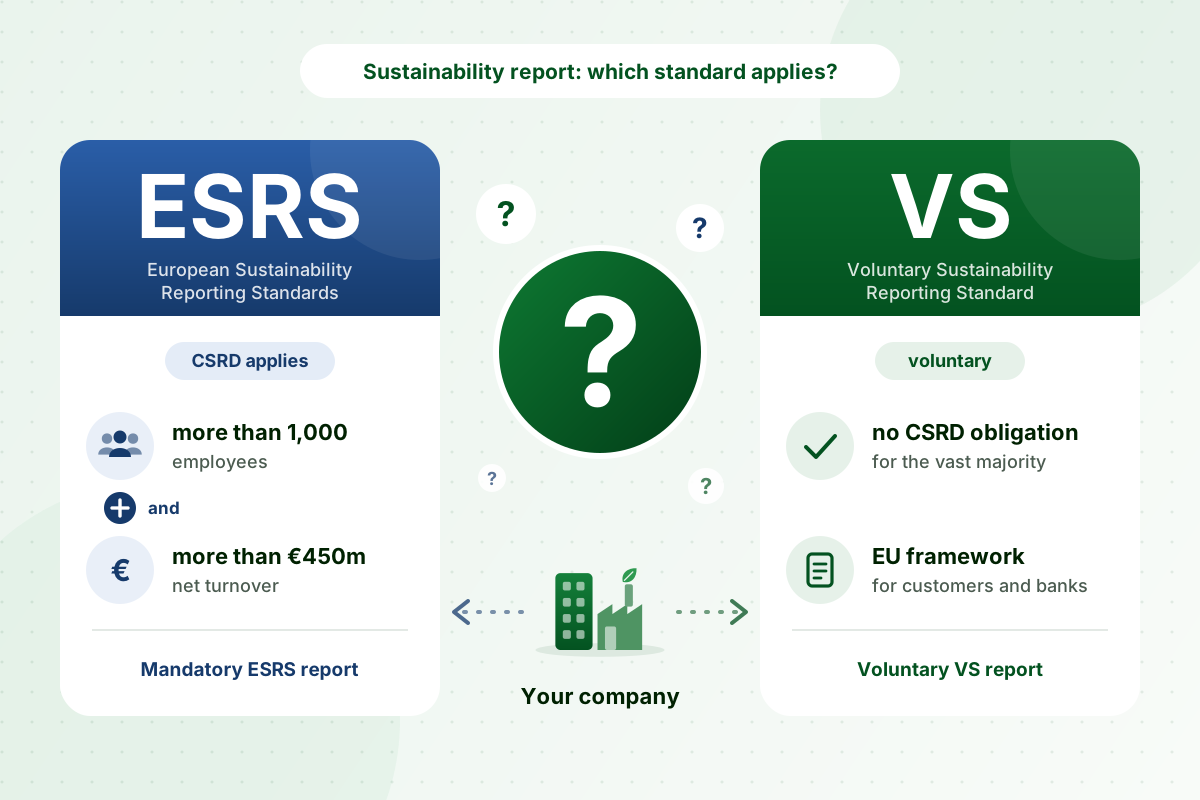
When is there a statutory CSRD obligation?
The new CSRD rules link the general reporting obligation to two conditions. A company must
- have more than 1,000 employees and
- generate more than €450 million in net turnover.
Both conditions must be met. The previous balance sheet threshold is no longer relevant for this distinction.
Companies that exceed both criteria remain obliged to report on sustainability under the CSRD and must apply the European Sustainability Reporting Standards (ESRS) to do so.
Who is the Voluntary Standard intended for?
The vast majority of companies do not exceed these new CSRD thresholds. As a rule, they have no statutory obligation to report on sustainability under the CSRD.
Nevertheless, banks, customers, investors or business partners may request sustainability information. This is exactly where the Voluntary Sustainability Reporting Standard (VS) comes in.
The VS enables companies outside the CSRD to record and publish their sustainability information according to a uniform European framework – without the extensive requirements of mandatory ESRS reporting.
Switching from ESRS to VS – is that possible?
Under certain conditions: yes.
If a company falls outside the mandatory scope because of the new CSRD thresholds, there is no longer a statutory obligation to continue reporting under the ESRS.
The company can then switch to the Voluntary Standard on a voluntary basis.
Example: A company has 800 employees and generates €300 million in turnover. It therefore exceeds neither of the two new CSRD thresholds. If it falls outside the CSRD reporting obligation because of the new rules, it can replace its previous ESRS report with voluntary reporting under the VS.
When must a company continue to report under the ESRS?
If a company exceeds both relevant thresholds – that is, more than 1,000 employees and more than €450 million in net turnover – the CSRD reporting obligation remains.
A voluntary VS report is then no substitute for the ESRS reporting required by law.
The VS and the supply chain
The Voluntary Standard is also of interest to companies that are not subject to the CSRD themselves but are part of the supply chain of a larger company.
The new value chain cap limits the sustainability information that companies subject to the CSRD can request from companies with up to 1,000 employees for their own reporting.
A VS report can therefore provide a practical basis for supplying standardised sustainability information to customers, banks and other business partners.
Important: applying the VS remains voluntary. Even a company outside the CSRD is not obliged to prepare a VS report.
ESRS or VS? A simple guide
More than 1,000 employees + more than €450 million in net turnover
→ CSRD reporting obligation / ESRS
Not both conditions met
→ no general CSRD reporting obligation / VS possible on a voluntary basis
The new Voluntary Standard thus gives mid-sized companies in particular a way to document their sustainability information in a structured form and according to a uniform European standard – even if there is no statutory CSRD reporting obligation.